



Performance Snapshot
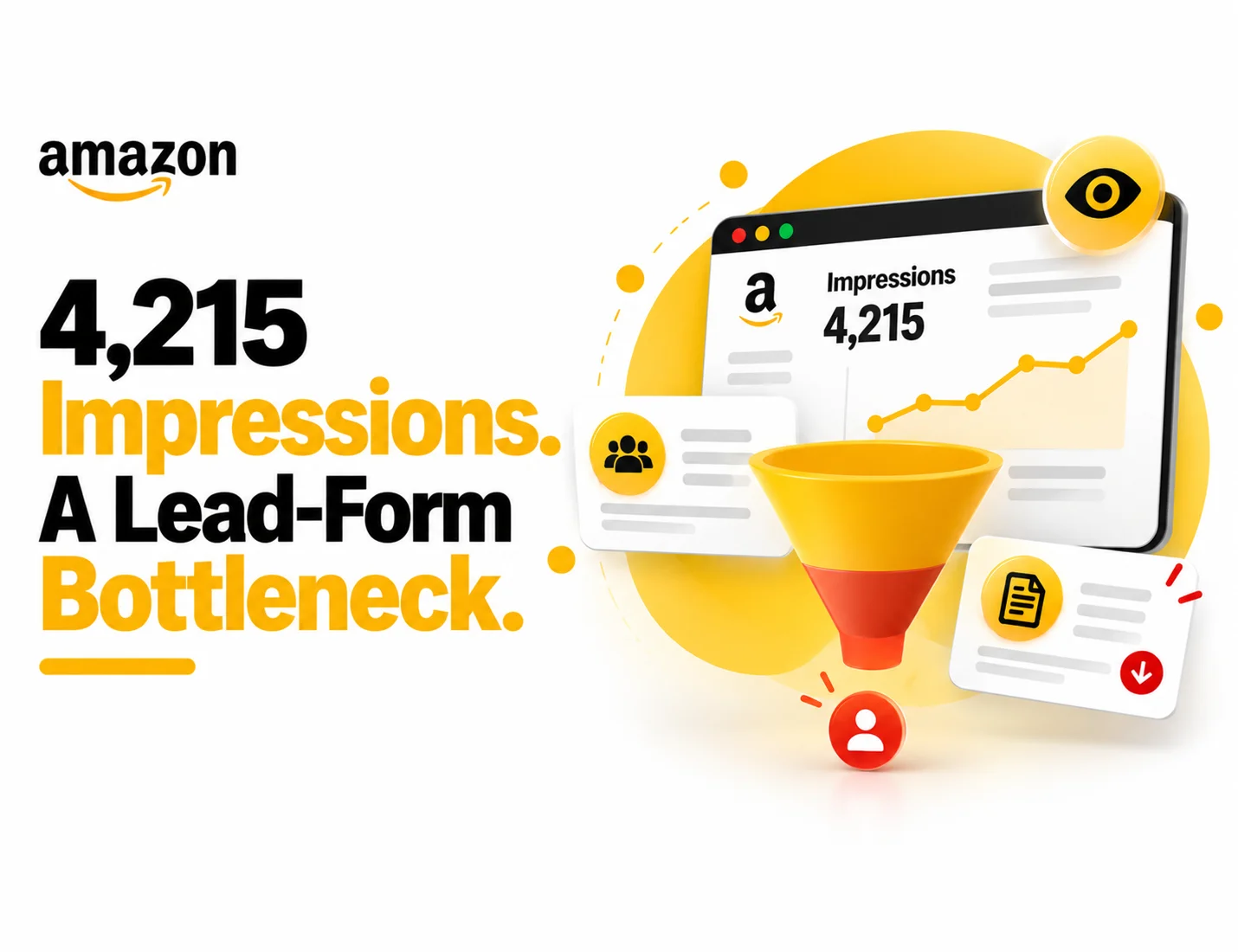
- 4,215 impressions were recorded in the supplied campaign data.
- 15 clicks were recorded, equal to a calculated click-through rate of approximately 0.36%.
- 9 lead-form opens were recorded, equal to 60% of the recorded clicks.
- 0 leads were submitted, leaving the campaign without a verified conversion.
The Business
An anonymized B2B advertiser was using LinkedIn Ads to reach prospects in Australia. The campaign depended on turning paid impressions into clicks, lead-form opens, and completed submissions.
The Real Problem
The campaign generated visibility and some interest, but the funnel stopped before a lead was captured. With 4,215 impressions, 15 clicks, and nine form opens producing zero leads, increasing spend would not solve the unresolved break between opening and submitting the form.
What We Found
- Click-through rate calculated from the supplied counts was approximately 0.36%.
- Nine form opens against 15 clicks showed that some users progressed beyond the ad.
- No form open became a submitted lead.
- The form experience, offer clarity, ad copy, and audience fit required validation before more budget was added.
What I.E.RARE Changed
This was an audit and strategy engagement. The immediate priority shifted from seeking more delivery to testing and simplifying the lead form. The recommended implementation sequence was to create a revised lead form, tighten the ad message, refine the audience, and retest the complete submission path before scaling spend.
Before and After
| Measure | Audit Baseline | Post-Project Position |
|---|---|---|
| Impressions | 4,215 | Not supplied |
| Clicks | 15 | Not supplied |
| Lead-form opens | 9 | Not supplied |
| Submitted leads | 0 | Not supplied |
| Verified performance result | No lead conversion | Not claimed |
How the Strategy Developed
Analysis followed the funnel in order: impressions, clicks, form opens, then leads. The campaign was not treated as a single performance total. Because the clearest loss occurred after users opened the form, form testing and simplification became the first priority, supported by revised copy and audience refinement.
The Result
The audit isolated the immediate conversion barrier and produced a focused corrective plan. Post-project performance data was not supplied, so no improvement in leads, cost per lead, or return on ad spend is claimed.
What Made the Difference
- Reading the campaign as a funnel instead of stopping at impressions and clicks.
- Separating ad-response weakness from form-completion failure.
- Prioritizing form testing before requesting more budget.
- Keeping recommendations tied to the supplied counts.
Evidence
This case study uses the supplied LinkedIn Ads totals: 4,215 impressions, 15 clicks, nine form opens, and zero leads. The advertiser’s identity, campaign names, account identifiers, and screenshots are omitted.
Key Takeaway
When users open a lead form but nobody submits it, the next step is to validate the form and offer before buying more traffic.
Related I.E.RARE Service
LinkedIn Advertising Audit and Lead Generation Strategy: I.E.RARE reviews funnel performance, form friction, ad messaging, and audience alignment to create a prioritized optimization plan.
Frequently Asked Questions
Why is this an audit case study instead of an outcome case study?
The supplied data confirms the problem and the recommended next steps, but it does not include post-implementation results.
Was the ad or the lead form the only issue?
The supplied counts show weakness at both the click stage and the submission stage. The audit therefore prioritized form validation while also recommending revised copy and audience refinement.
Why not increase the budget immediately?
More delivery would send additional traffic into a funnel that had not produced a submitted lead. Testing the form and message first reduced the risk of scaling an unresolved problem.
What should be measured after implementation?
The next review should compare click-through rate, form-open rate, form-completion rate, leads, and cost per lead against the audit baseline.
Related Case Studies
About I.E.RARE
I.E.RARE supports ecommerce and lead-generation teams with advertising audits, conversion-focused strategy, account management, listing optimization, and creative improvement. Case studies use verified supplied information and omit client-identifying details.